Overview
Produce Posse is a visitor experience research project on Ferry Plaza Farmers Market. Through interviews and fieldwork, we explored how atmosphere and novelty drive visits—while lack of real-time information prevents regular attendance.
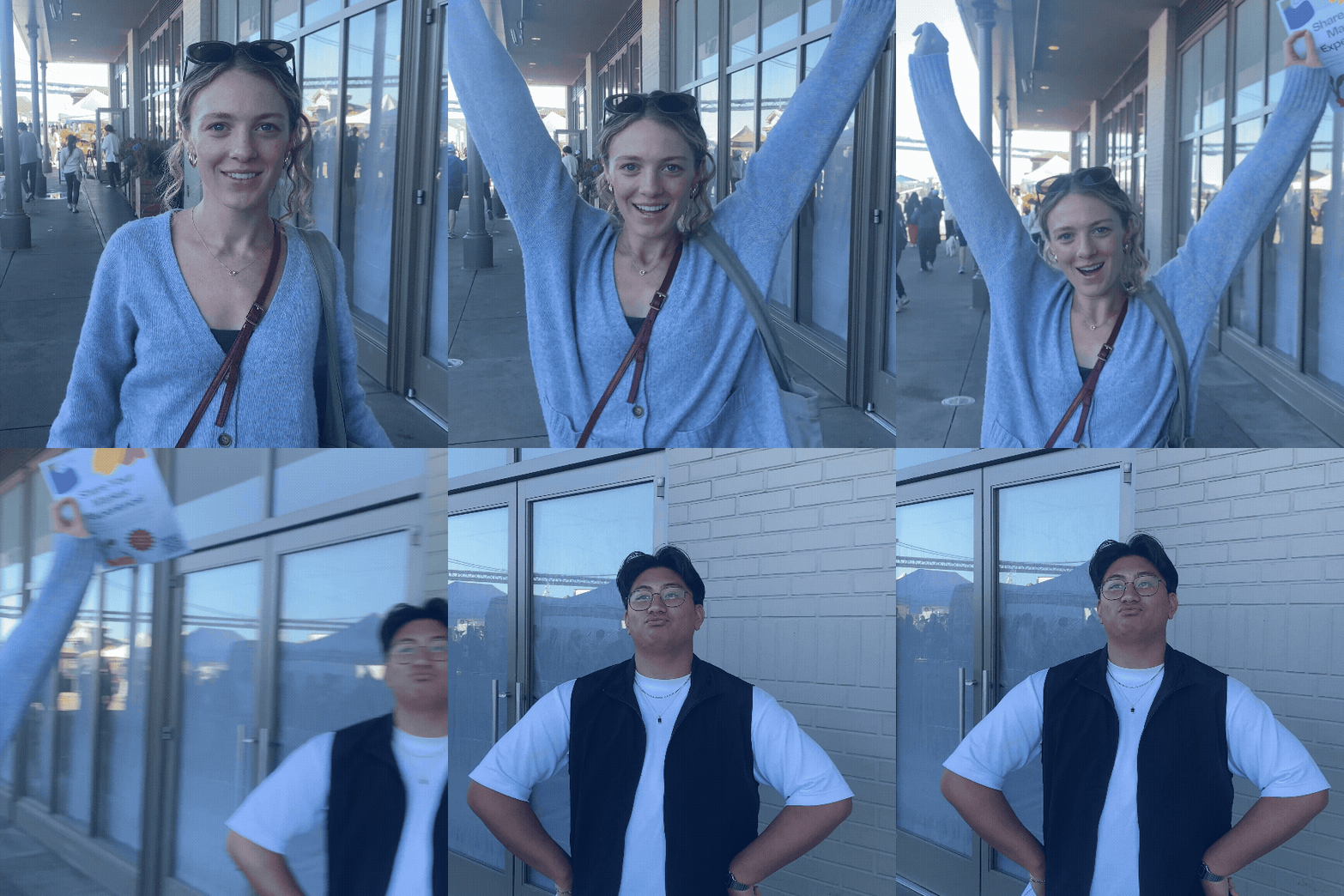
In this project, I worked with Alexa Jacobson (user researcher) and Kyle Samonte (user researcher) as part of a three-person research team.
Goal
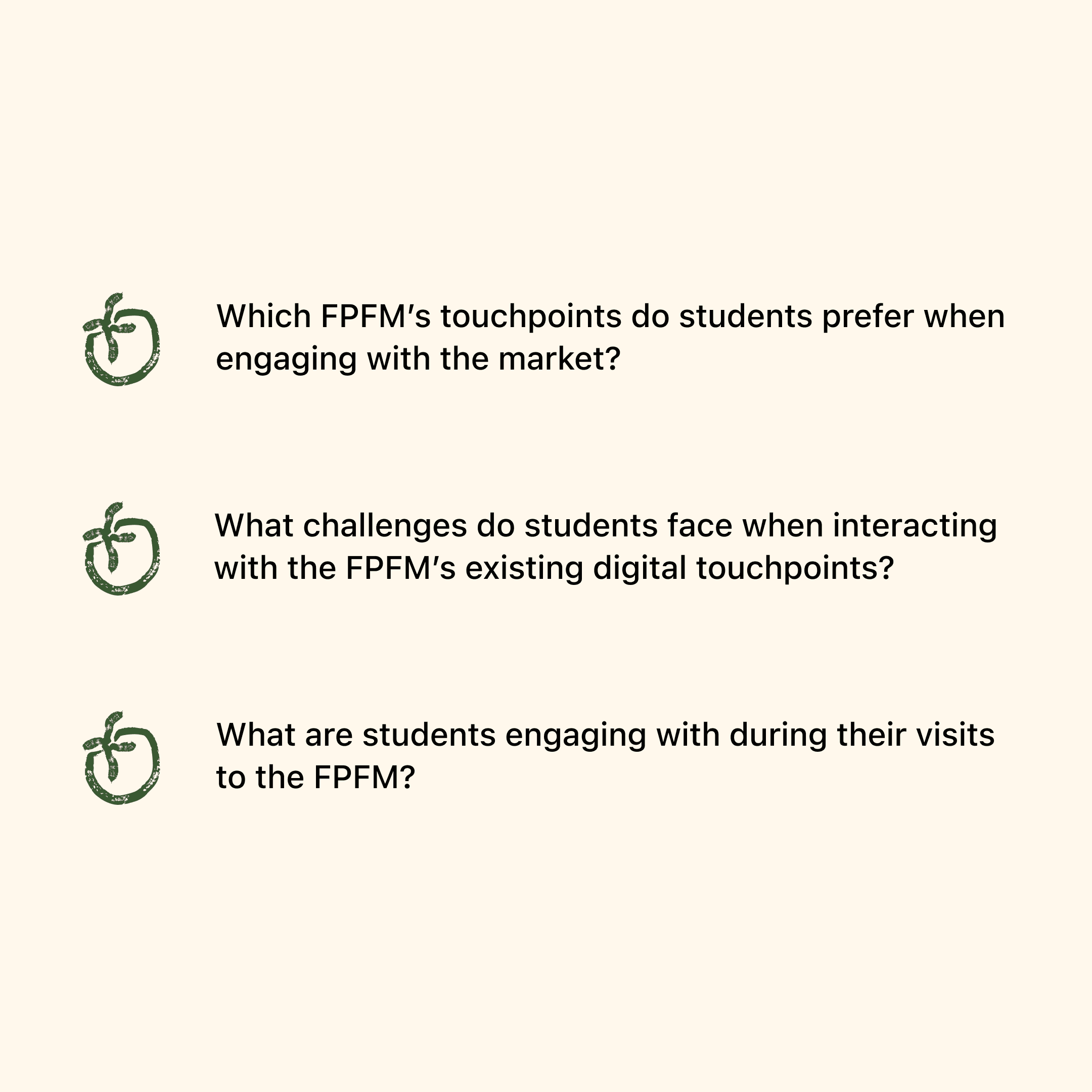
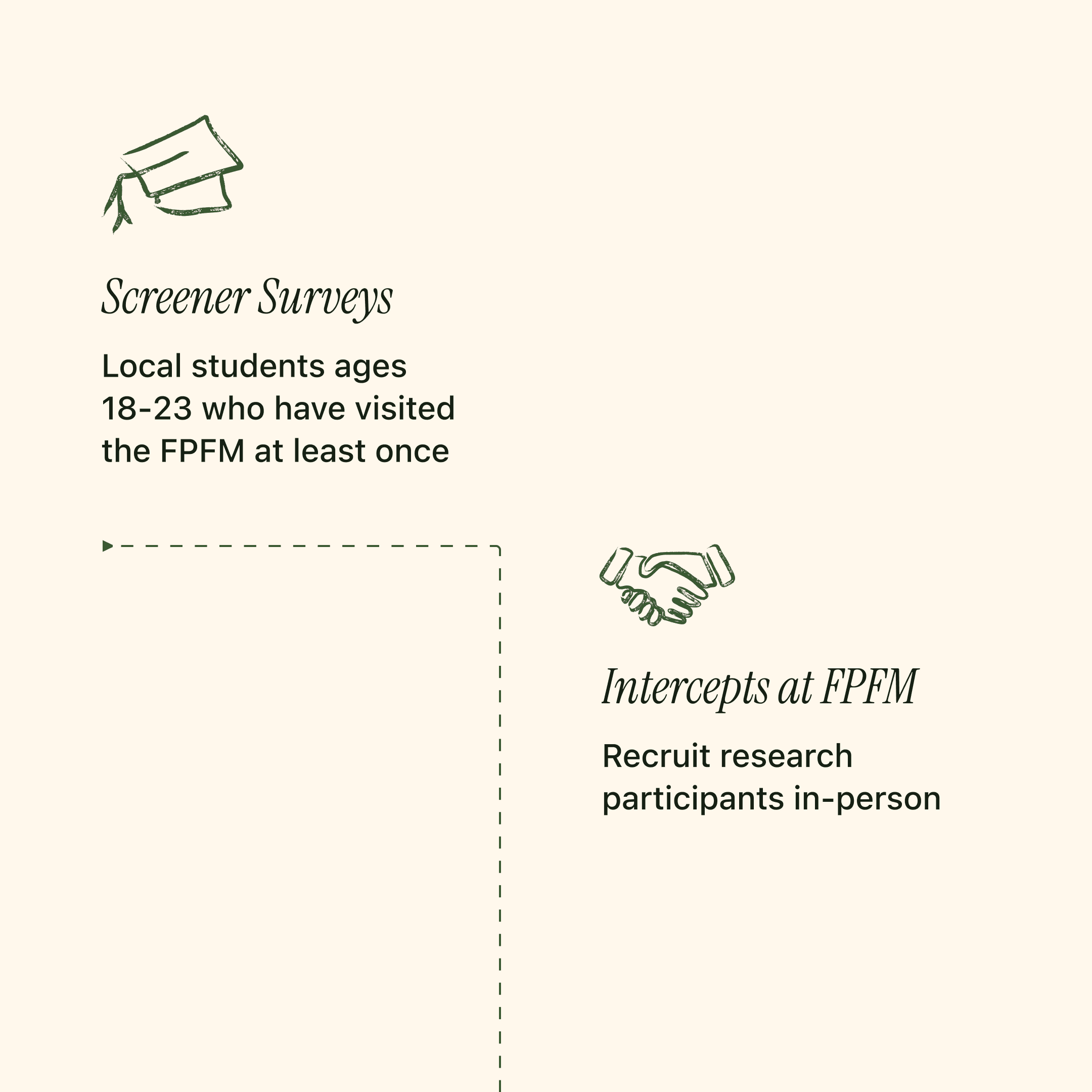
Learning how local students (18-23) digitally engage with the farmers market, and identify opportunities to improve the Ferry Plaza Farmers Market’s digital touch-points.
Goal
Learning how local students (18-23) digitally engage with the farmers market, and identify opportunities to improve the Ferry Plaza Farmers Market’s digital touch-points.
Our Approach
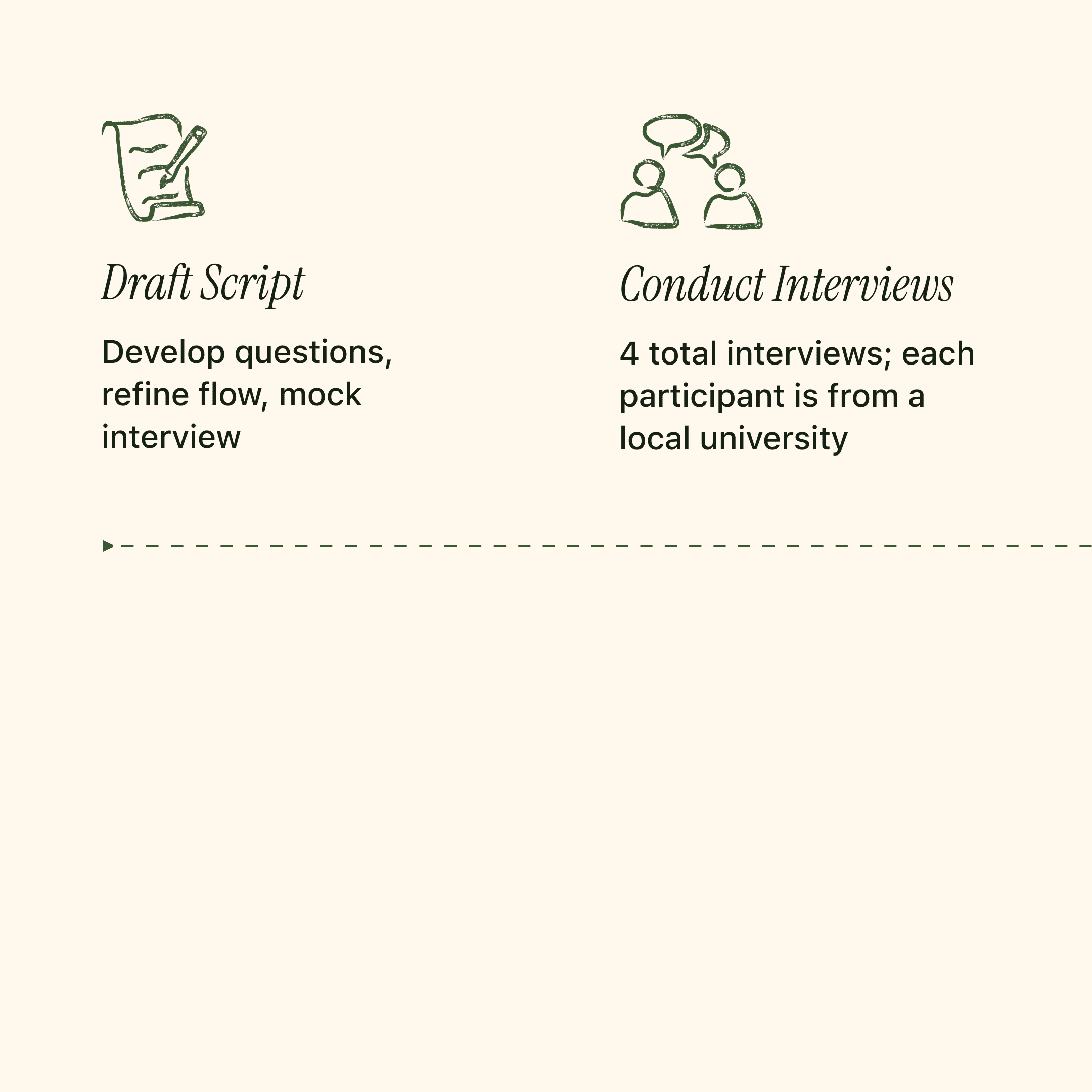
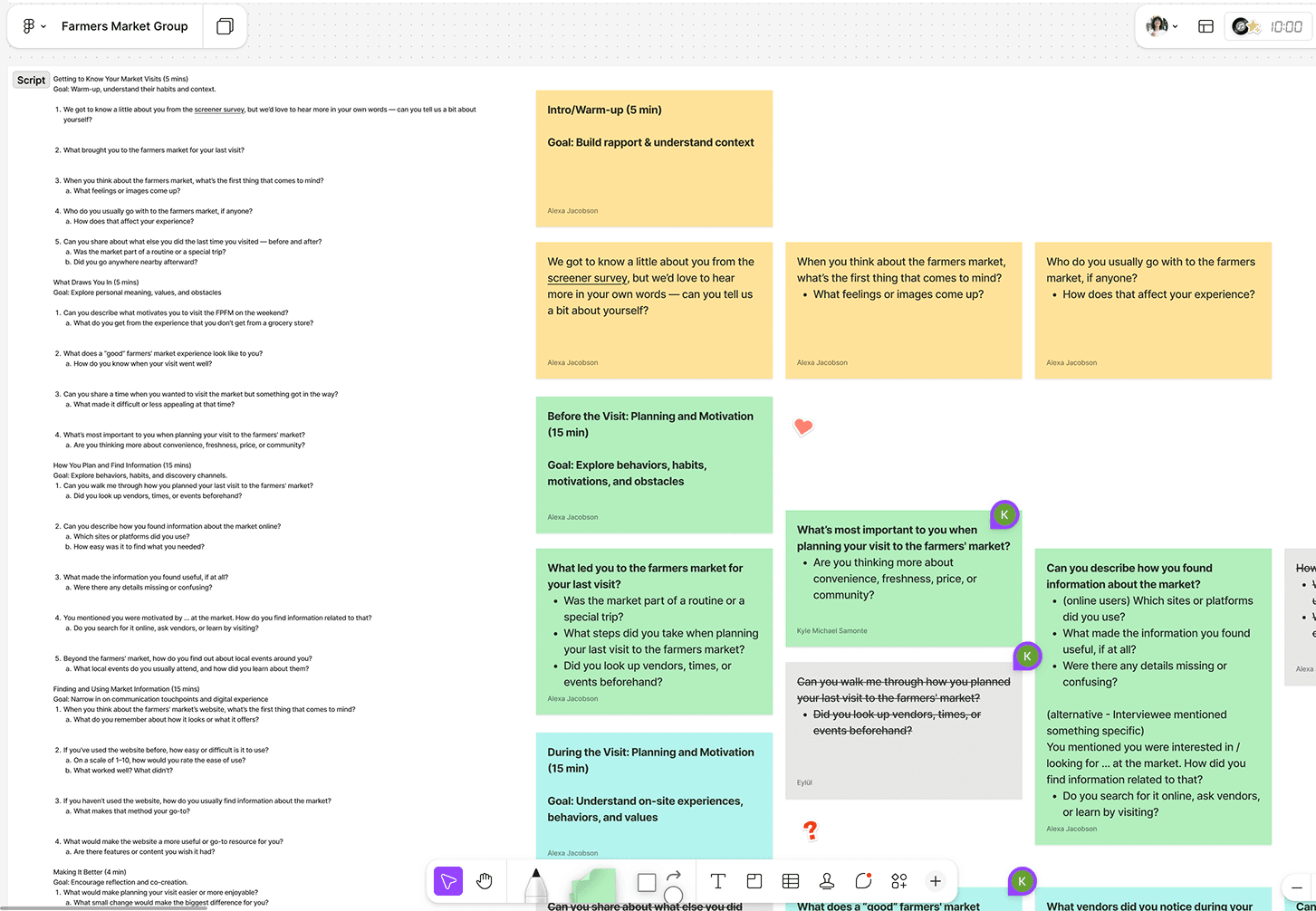
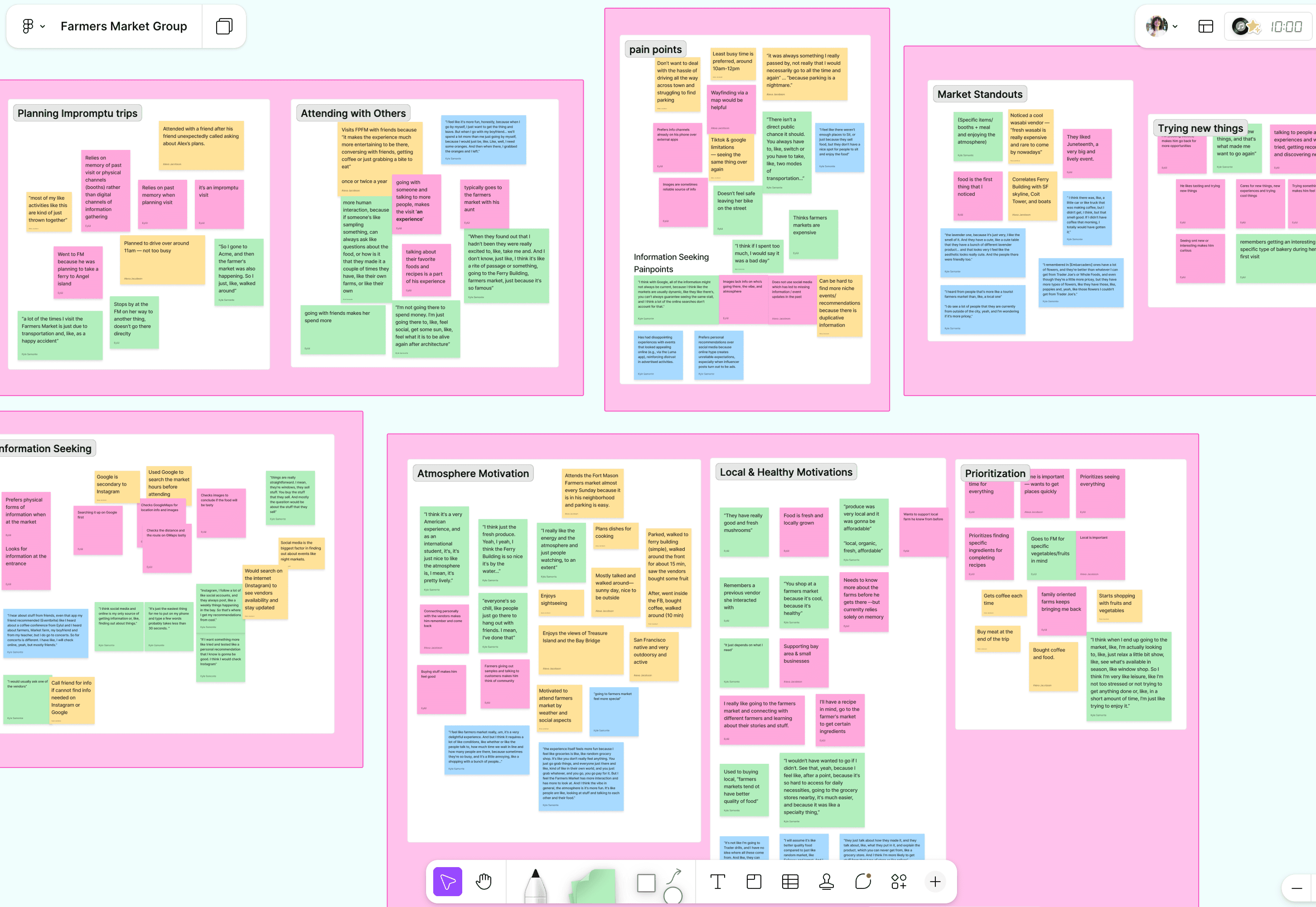
We intercepted people and scheduled interviews after a screening survey to learn more about their engagement behavior.
Our Approach
We intercepted people and scheduled interviews after a screening survey to learn more about their engagement behavior.
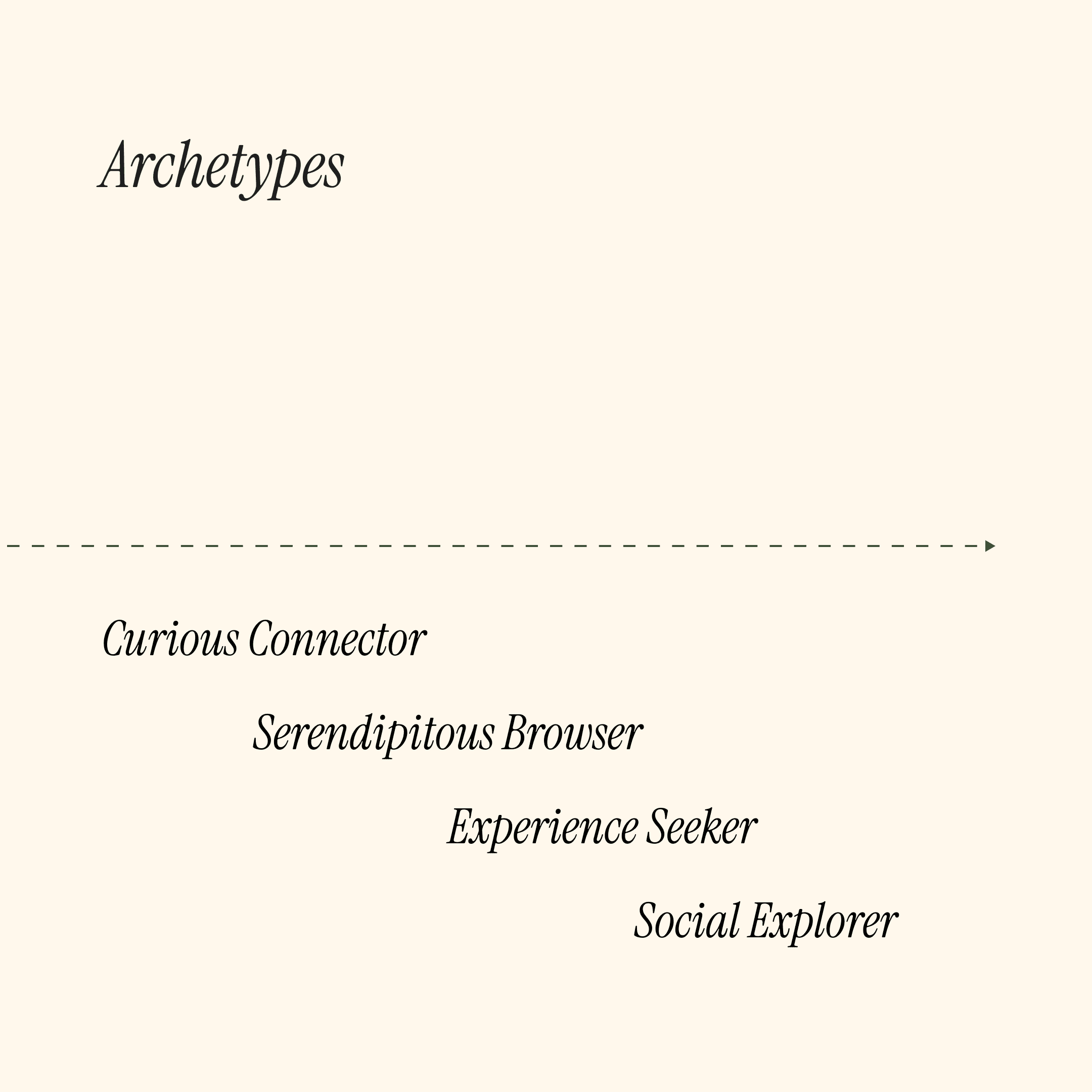
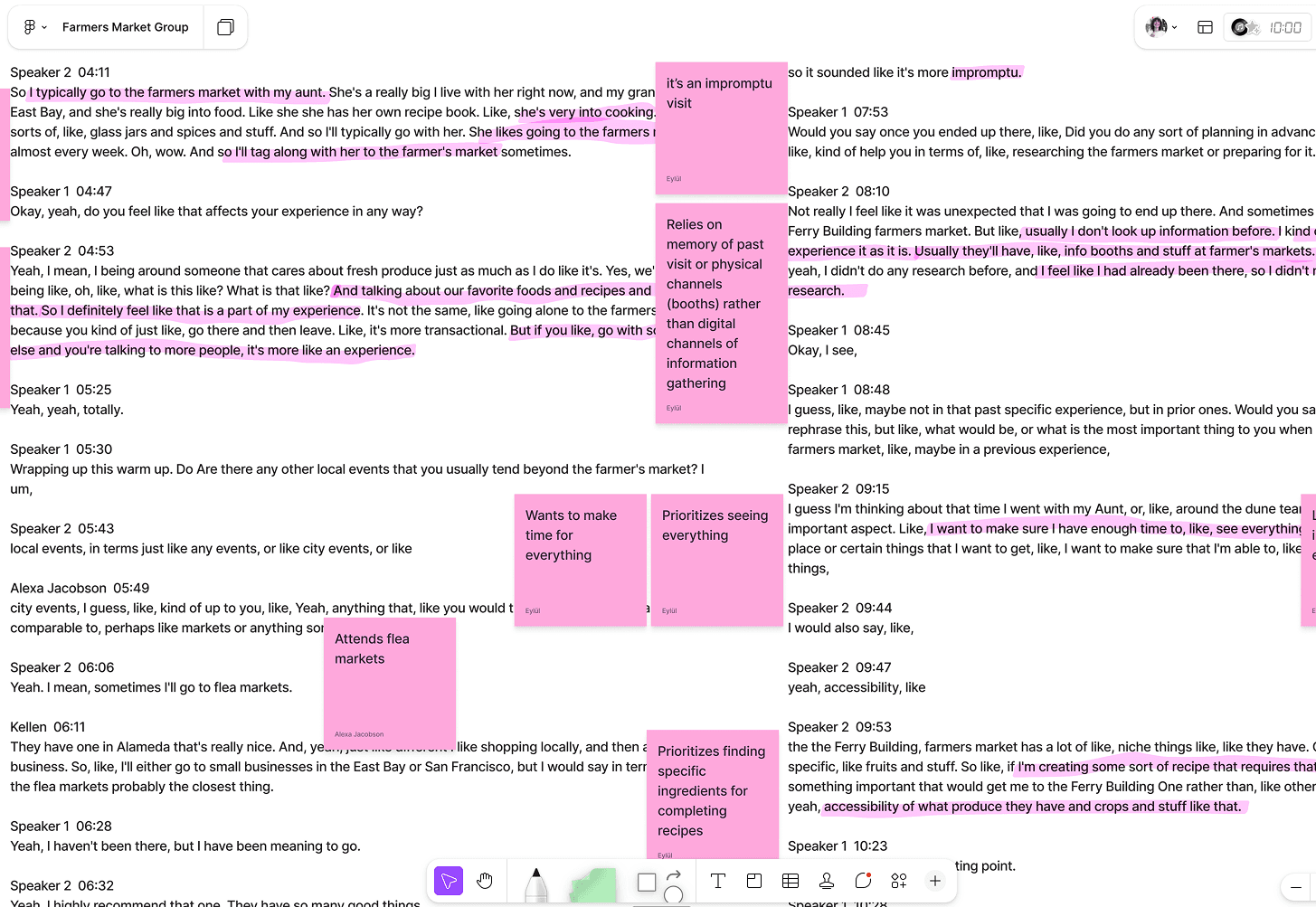
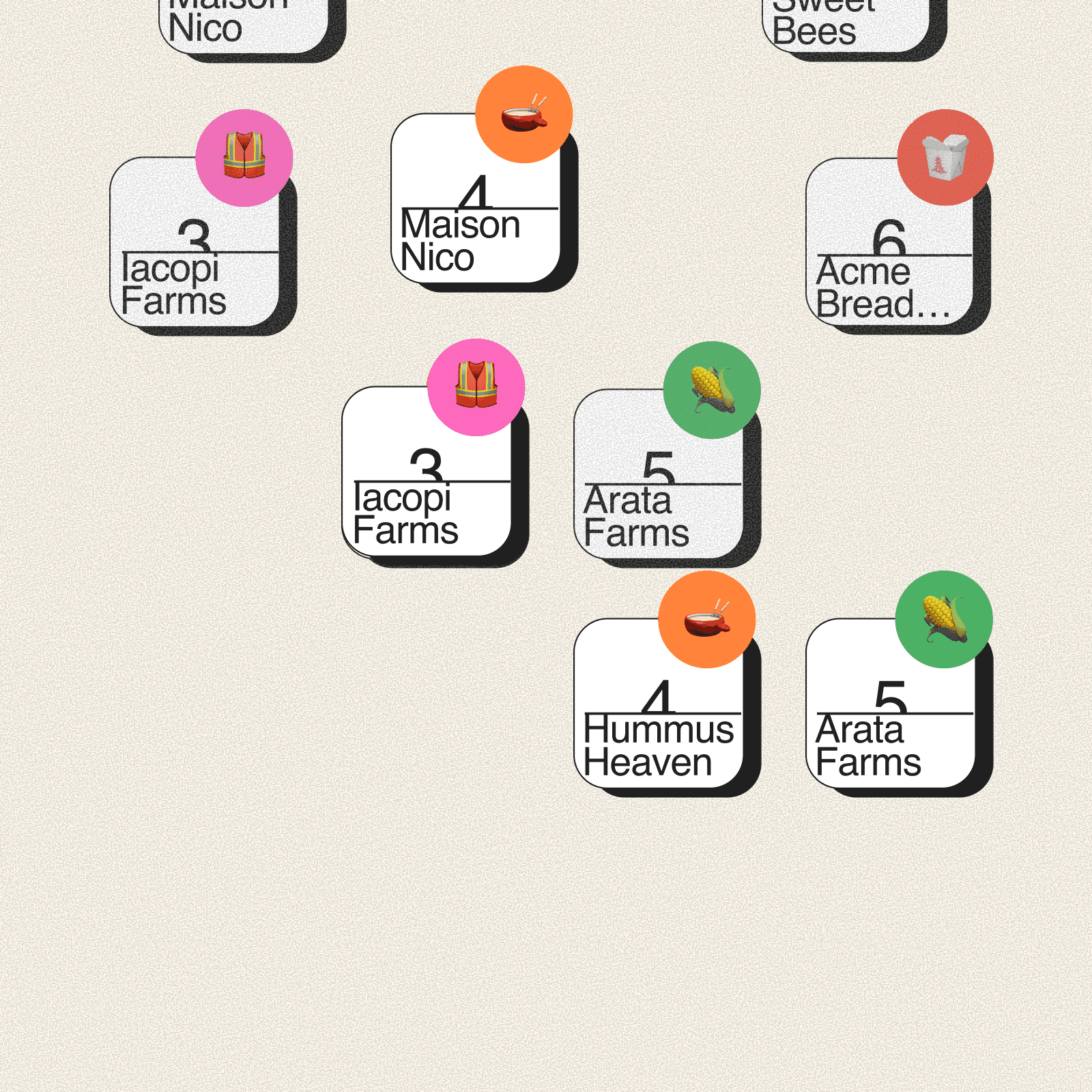
The interviews surfaced two primary visit modes: Mission and Leisure.
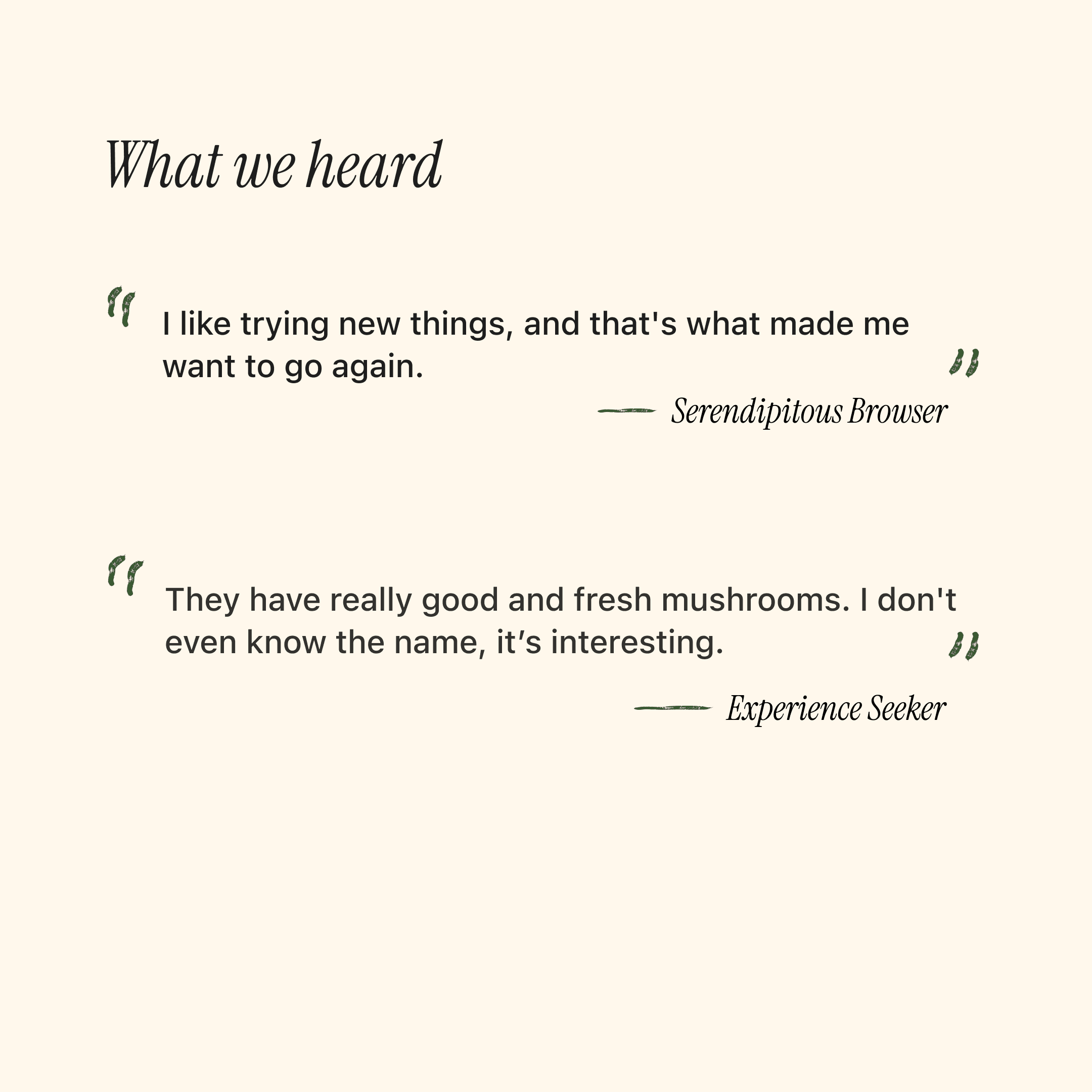
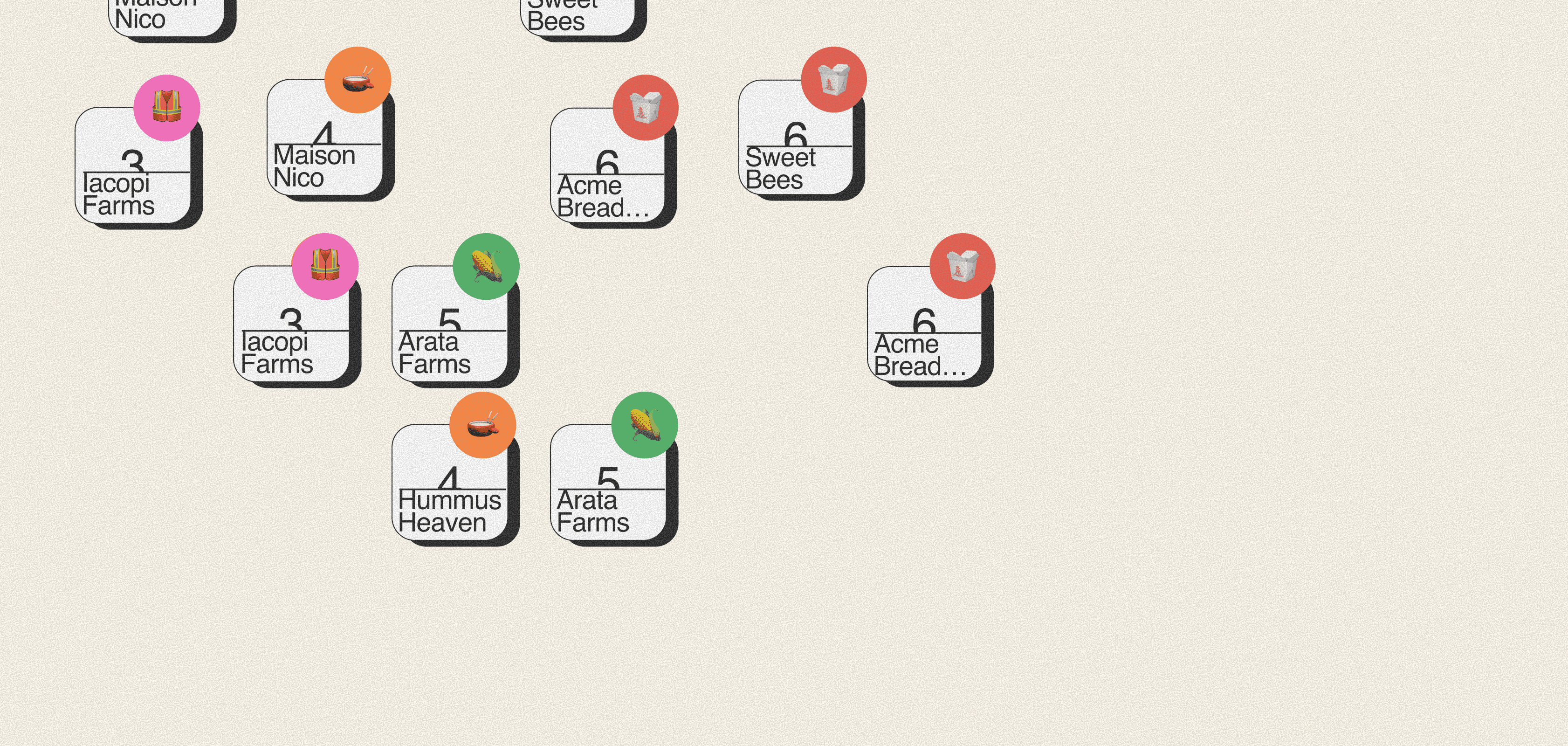
Novelty emerged as a key driver of repeat visits, with memorable vendors and rare products forming mental maps that students relied solely on. This points to a clear opportunity: improving way-finding cues during the planning stage can benefit student visitors and reduce cognitive load.
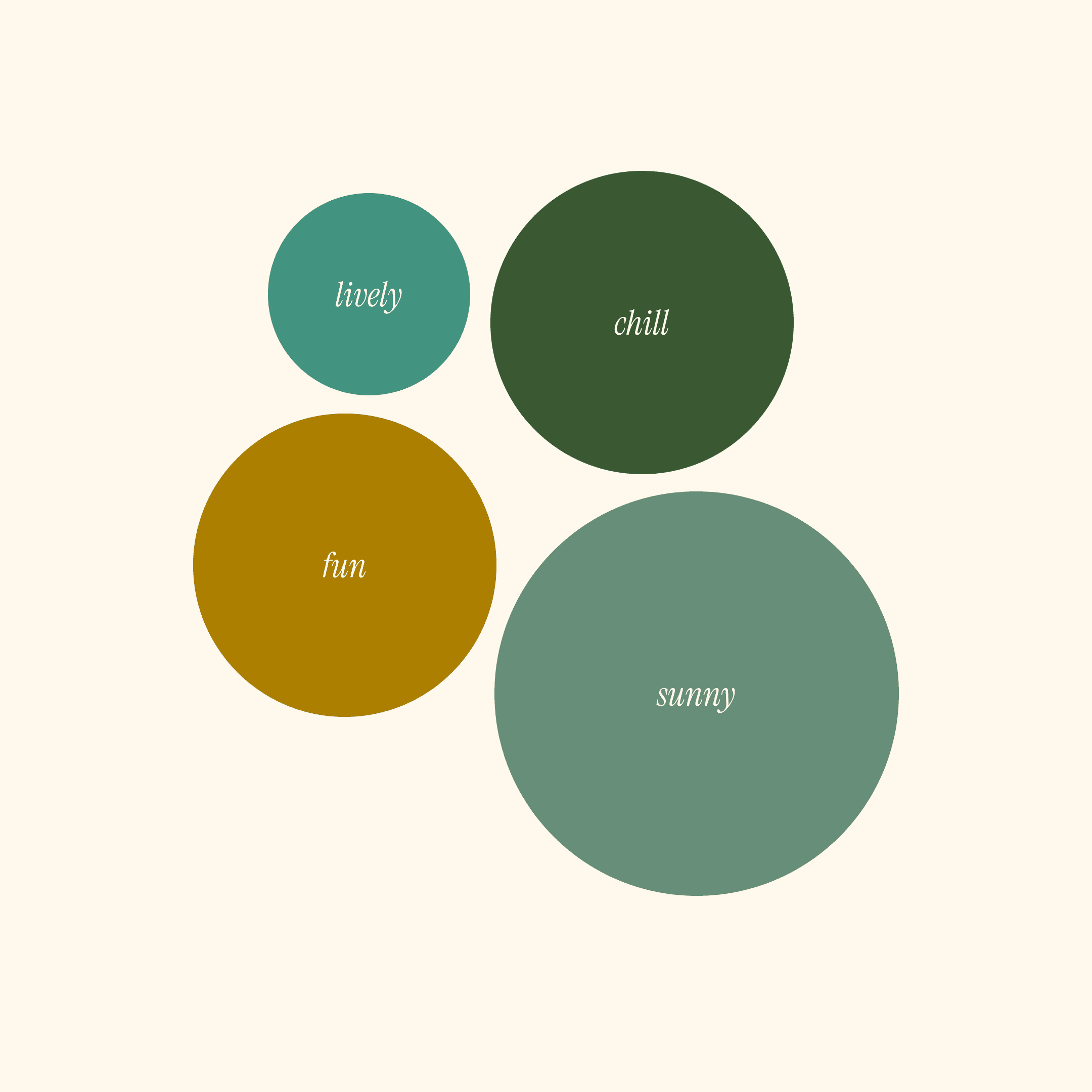
The frequency bubble chart reveals that students strongly associate the market with being “lively”, “chill”, “fun”, and “sunny”. We wanted to improve the way-finding cues on the website so our users can enjoy the lively sun instead of searching for where Acme Bread is.
Insights
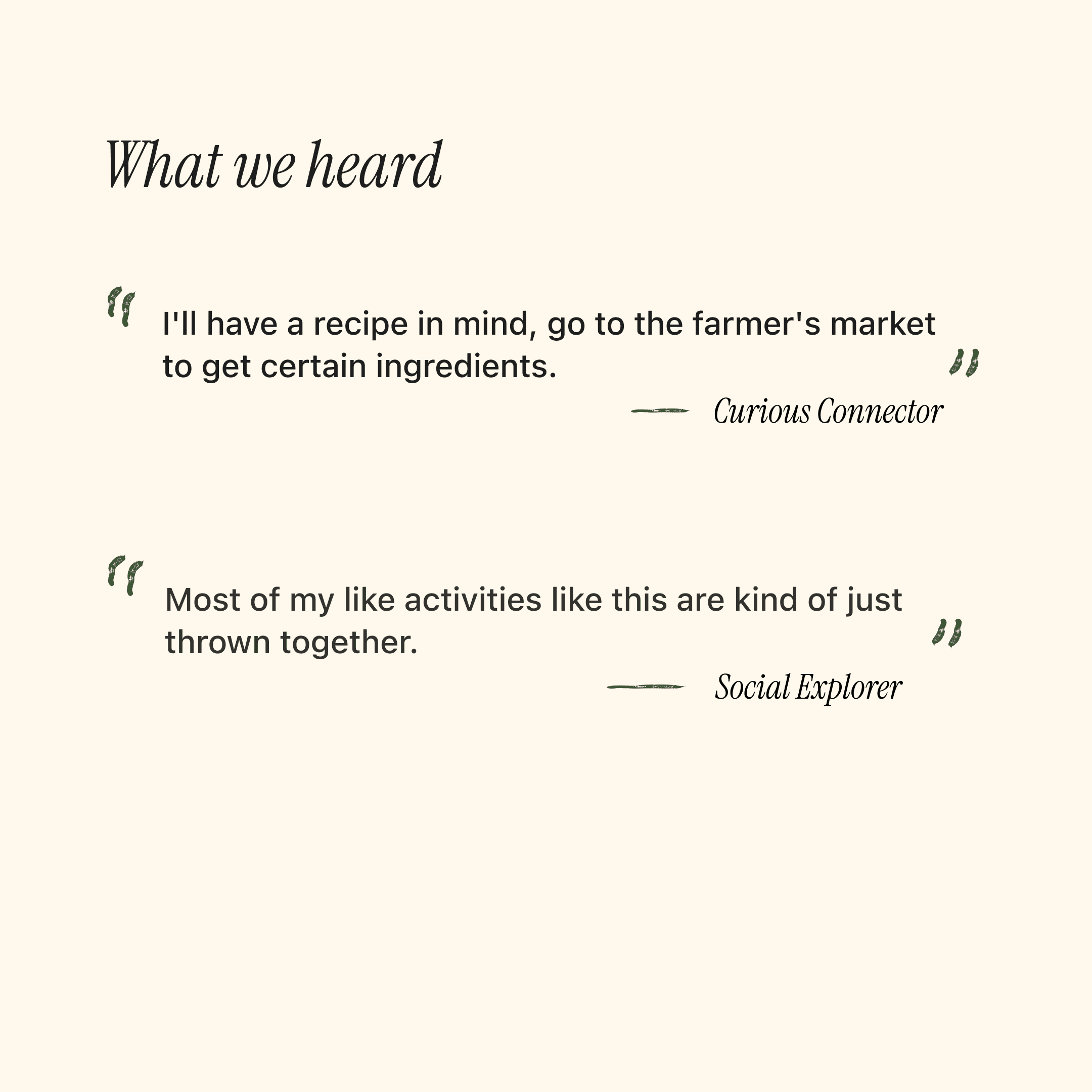
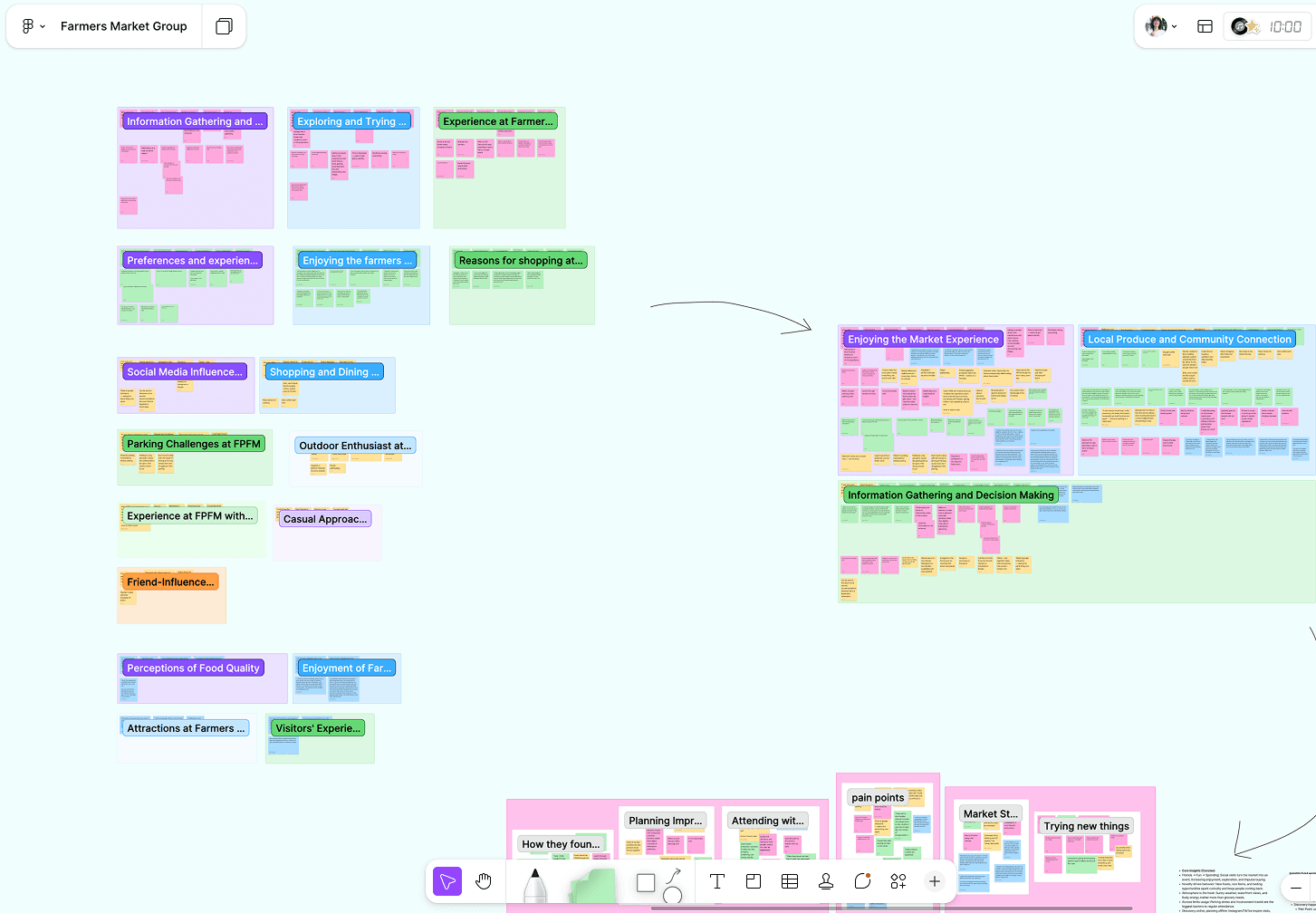
Students visit when something feels rare or time-sensitive, they treat the market as a social destination first, and they rely on friends and personal memory rather than any official digital resource — leaving the website largely unused in both the planning and navigation stages.
Insights
Students visit when something feels rare or time-sensitive, they treat the market as a social destination first, and they rely on friends and personal memory rather than any official digital resource — leaving the website largely unused in both the planning and navigation stages.
Validating Ideas
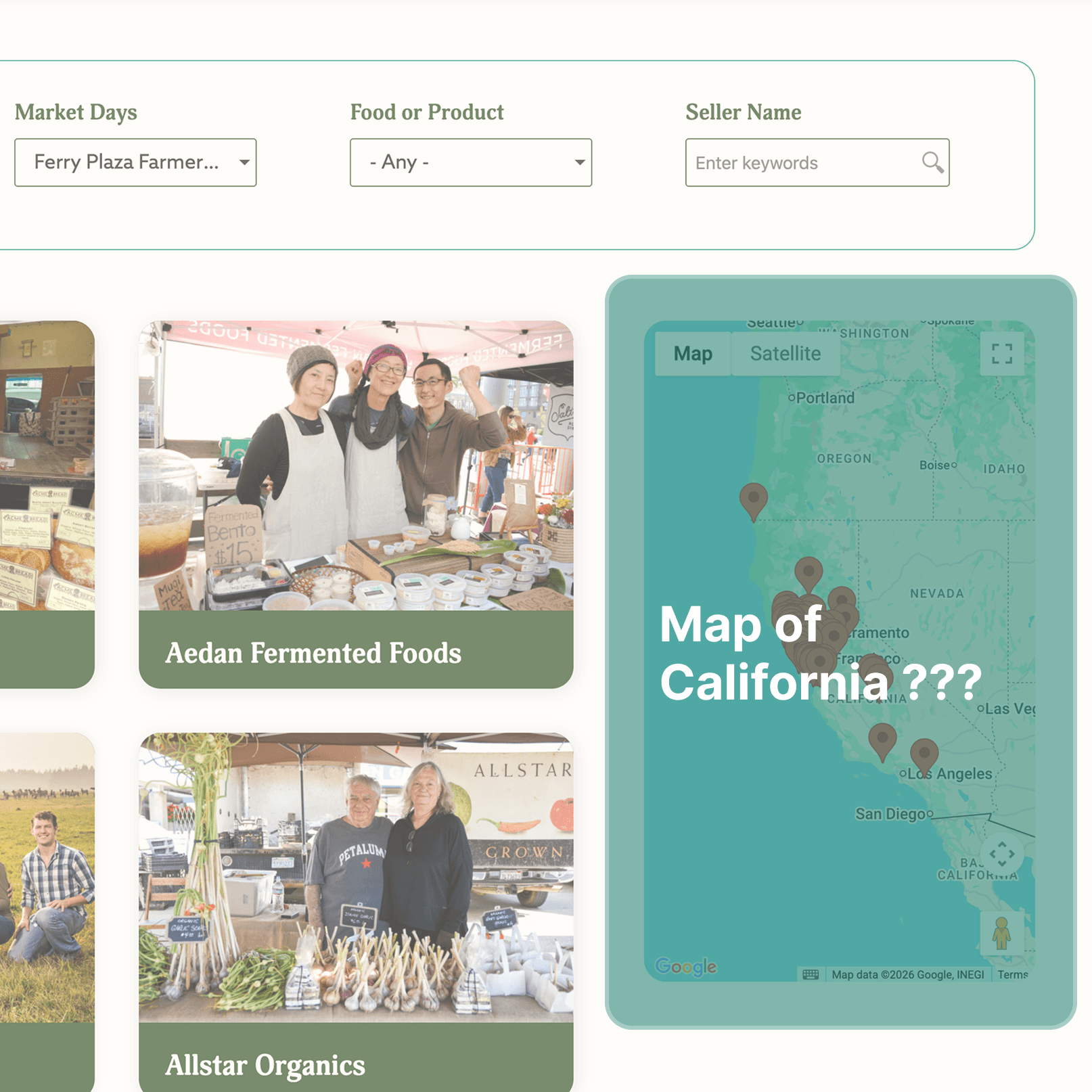
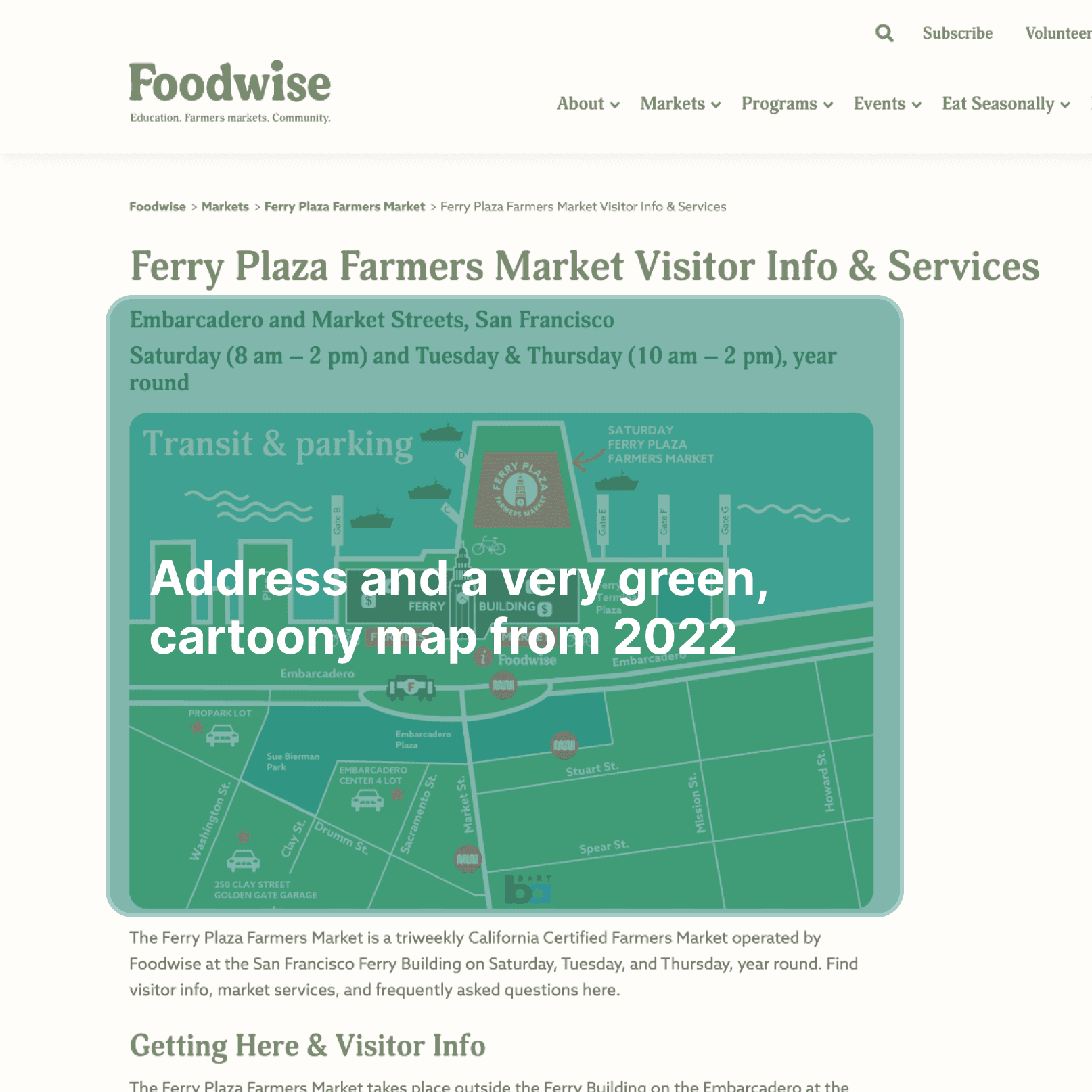
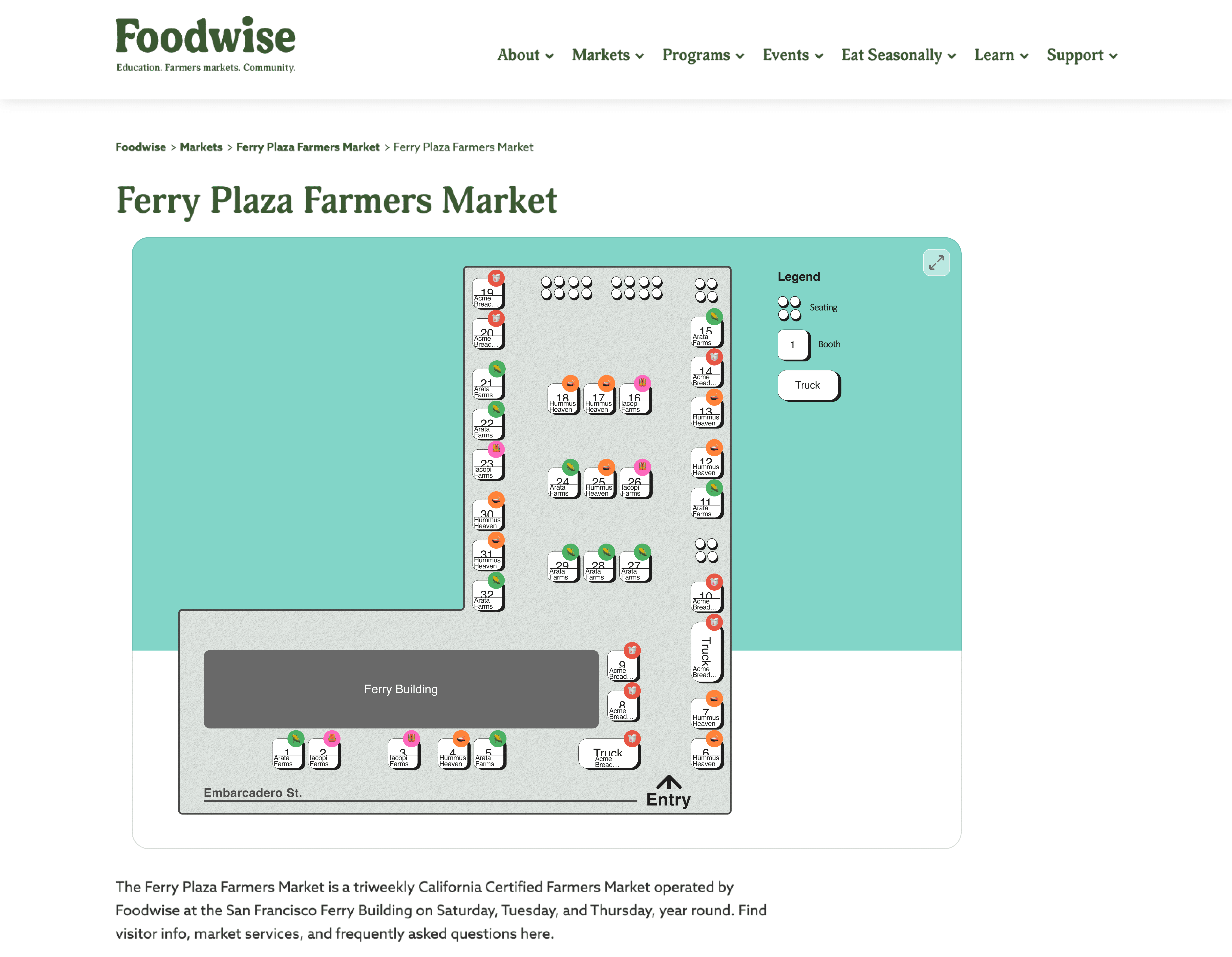
Auditing the existing website confirmed what our research surfaced. There was no vendor map — only a map of farm locations (irrelevant to someone trying to navigate the market floor) and an outdated, cartoonish illustrated map from 2022. The gap our users described wasn't just a perception problem. It was a real, unmet need.
Validating Ideas
Auditing the existing website confirmed what our research surfaced. There was no vendor map — only a map of farm locations (irrelevant to someone trying to navigate the market floor) and an outdated, cartoonish illustrated map from 2022. The gap our users described wasn't just a perception problem. It was a real, unmet need.
Design Suggestions
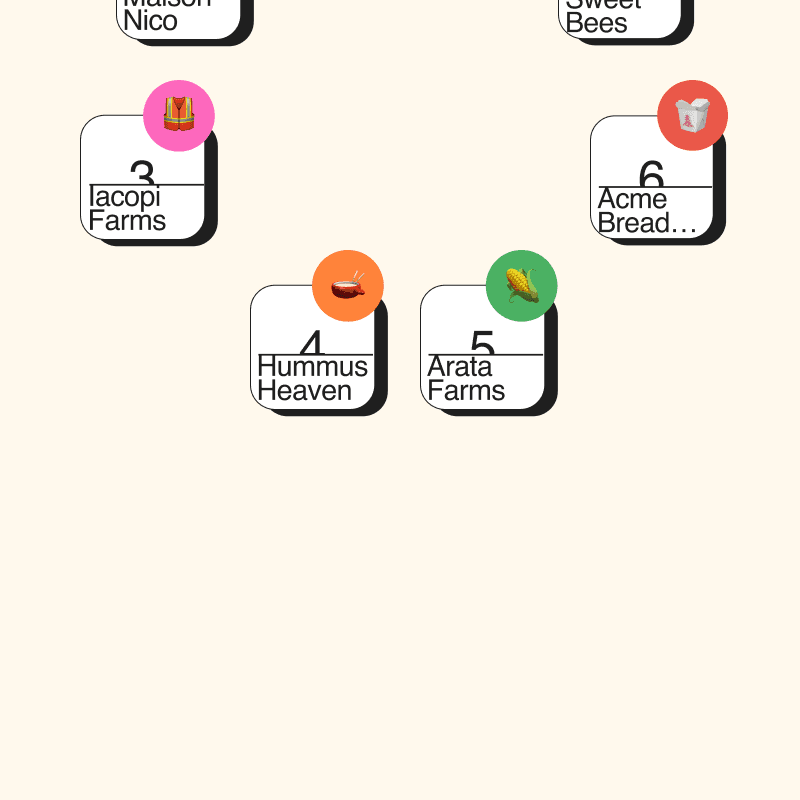
We proposed replacing both maps with a clean 2D bird’s-eye view of the market floor, with subtle interactivity for filtering by category or searching vendors. The goal was to help students orient themselves before arriving and reduce the cognitive load of navigating a busy market. After exploring several styles, we chose the bird’s-eye view because it was the most immediately legible and required the least mental translation between map and space.
Design Suggestions
We proposed replacing both maps with a clean 2D bird’s-eye view of the market floor, with subtle interactivity for filtering by category or searching vendors. The goal was to help students orient themselves before arriving and reduce the cognitive load of navigating a busy market. After exploring several styles, we chose the bird’s-eye view because it was the most immediately legible and required the least mental translation between map and space.


Overview
Produce Posse is a visitor experience research project on Ferry Plaza Farmers Market. Through interviews and fieldwork, we explored how atmosphere and novelty drive visits—while lack of real-time information prevents regular attendance.
The interviews surfaced two primary visit modes: Mission and Leisure.
Novelty emerged as a key driver of repeat visits, with memorable vendors and rare products forming mental maps that students relied solely on. This points to a clear opportunity: improving way-finding cues during the planning stage can benefit student visitors and reduce cognitive load.
The frequency bubble chart reveals that students strongly associate the market with being “lively”, “chill”, “fun”, and “sunny”. We wanted to improve the way-finding cues on the website so our users can enjoy the lively sun instead of searching for where Acme Bread is.
Back to Top
Basket Marketplace
Back to Top
Basket Marketplace